Lake Manyara National Park
A compact Rift Valley park famous for tree-climbing lions, huge flocks of flamingos, and one of the most spectacular forest entrances in Africa.
OVERVIEW
About Lake Manyara National Park
A compact Rift Valley park famous for tree-climbing lions, huge flocks of flamingos, and one of the most spectacular forest entrances in Africa.
Lake Manyara is a small park - at 330 km² it can be covered in a half day - but it packs an outsized punch. The park's most famous residents are the tree-climbing lions, which are regularly seen draped in the branches of mahogany and acacia trees. The behaviour is unusual and not fully understood, but theories include avoiding tsetse flies, escaping the heat, and getting a better vantage to spot prey. Whatever the reason, a lion in a tree is one of those images that makes a safari.
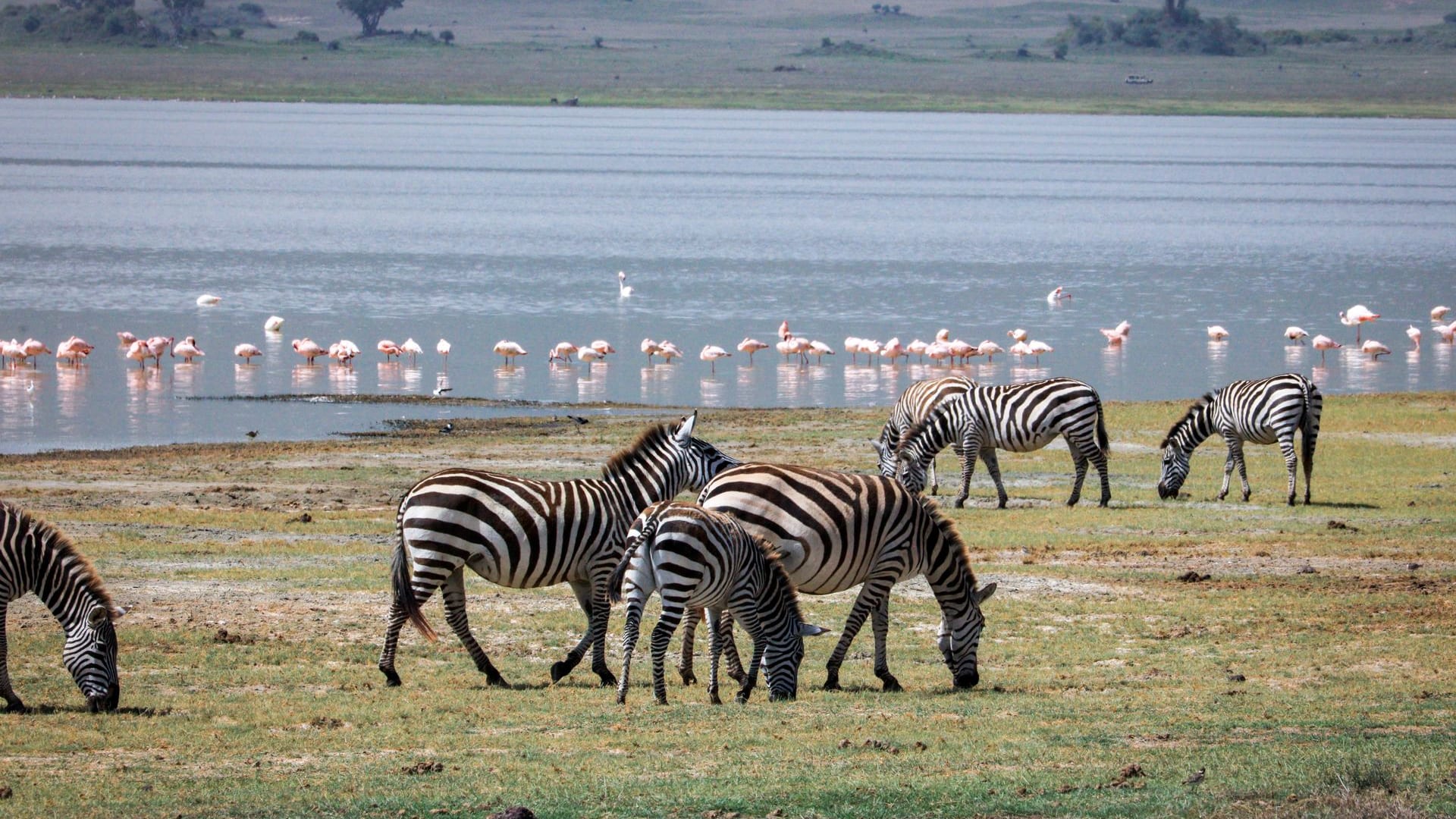
The lake itself is one of the most important bird sanctuaries in East Africa. Hundreds of thousands of lesser flamingos congregate at the alkaline shoreline between November and April, and the lake also hosts pelicans, storks, kingfishers, and over 400 recorded bird species. The water is shallow and warm - hippos wallow along the edge, and a hippo-viewing platform is one of the best places in Tanzania to watch them from a safe distance.
The entrance to the park is one of the most spectacular in Africa: a sunken road runs through a dense groundwater forest of fig trees, mahogany, and wild mango. Elephants and troops of baboons forage in the understorey, and it's common to have a sighting within the first ten minutes of entering the park. After the forest, the road emerges into open grassland that backs up to the Rift Valley escarpment - a wall of green rising 600 m above the lake.
Lake Manyara works well as a half-day visit on the way to the Ngorongoro Crater, or as a one-night stop. It's also one of the few parks where night game drives are permitted, opening up the chance to see bushbaby, civet, and porcupine.
WILDLIFE & FAUNA
Key Species to Spot
Tree-Climbing Lion
Lake Manyara's most famous residents - lions that climb and rest in large mahogany and acacia trees.
Flamingo
Hundreds of thousands of lesser flamingos fringe the lake, turning the shoreline pink.
Hippo
A hippo pool at the lake's edge is one of the park's most reliable sightings.
Pelican
Great white pelicans breed on the lake in large colonies.
Olive Baboon
Troops of 50+ baboons are common - keep car windows up in the forest.
Blue Monkey
Often seen in the groundwater forest, along with vervet monkeys.
Giraffe
Smaller numbers than the Serengeti, but Masai giraffes are common in the wooded areas.
SEASONALITY
Best Time to Visit Lake Manyara National Park
Peak Season: January, February, October, November, December. Good shoulder months: March, June, July, August, September.
KEY EXPERIENCES
What to Experience Here
- Tree-climbing lions (best chance of any park in Tanzania)
- Flamingo-fringed lake shore (peak November–April)
- Groundwater forest with elephants, hippos, and over 400 bird species
- Hippo pool viewing platform
- Night game drives (allowed in Lake Manyara)
- Mountain biking and canoeing outside the park
- Maasai markets in nearby Mto wa Mbu
PRACTICAL INFO
Getting to Lake Manyara National Park
90 minutes from Arusha by car, on the road to the Ngorongoro Crater. Charter flights land at the Lake Manyara airstrip.