
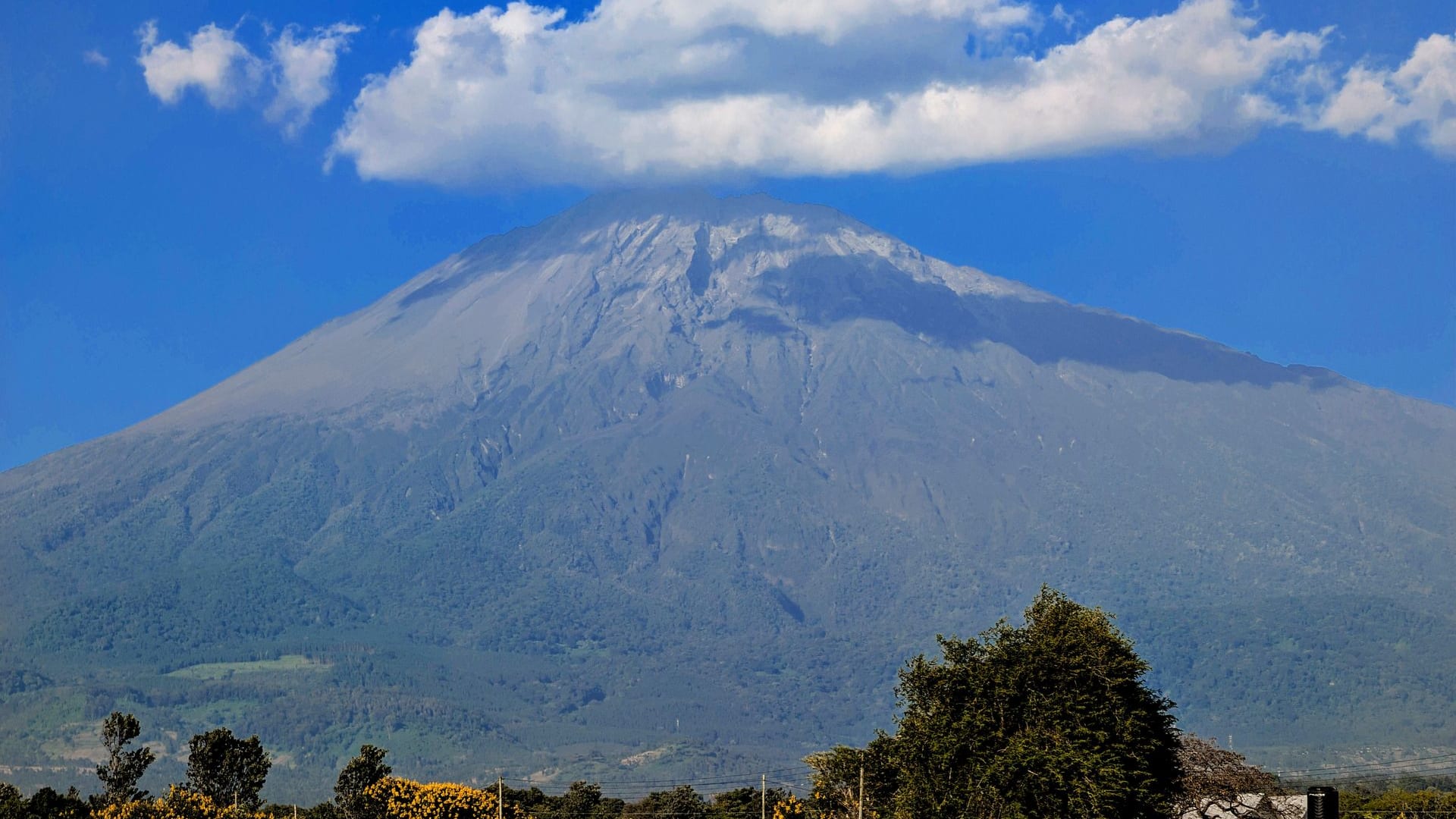
Mount Meru
Tanzania's second-highest peak at 4,566 m - a quieter, more intimate trek than Kilimanjaro, with giraffe and buffalo on the lower slopes and a dramatic knife-edge summit ridge.
OVERVIEW
About Mount Meru
Tanzania's second-highest peak at 4,566 m - a quieter, more intimate trek than Kilimanjaro, with giraffe and buffalo on the lower slopes and a dramatic knife-edge summit ridge.
Mount Meru is Tanzania's secret weapon. Most visitors arrive planning to climb Kilimanjaro and leave raving about the mountain they did first. Rising to 4,566 metres inside Arusha National Park, Meru is everything Kili is not - uncrowded, scenically varied, alive with wildlife, and crowned by one of the most dramatic summit ridges in Africa.
The single route - the Momella Route - begins at Momella Gate, deep inside the park. On day one you walk through montane forest with an armed park ranger at the front of the group, watching giraffe and buffalo drift through the trees. There is nothing quite like it on any other mountain on the continent. The trail climbs steadily to Miriakamba Hut, then to Saddle Hut, and at midnight on day three or four you start the final push - a narrow ridge between the outer and inner Meru crater - to reach Socialist Peak in time for sunrise.
The summit is a genuine mountain summit, not a high pass. The view stretches from Kilimanjaro's glaciers on the eastern horizon to the Rift Valley lakes below, with the sheer walls of the Meru crater dropping away on either side of the ridge. It is one of the few places in East Africa where you can watch the sun rise over the continent's highest peak while standing on the continent's fifth-highest.
Most trekkers choose between two itineraries. The 3-day climb compresses the experience for fit, experienced hikers and skips the Little Meru acclimatisation hike. The 4-day climb adds a night at Miriakamba Hut on the descent and a proper acclimatisation day at Saddle Hut, with the recommended side-trip up Little Meru (3,820 m) for sunset views of Kilimanjaro. The 4-day version has a summit success rate around 90%; the 3-day drops to roughly 80%.
Trekking Meru before Kilimanjaro is one of the best acclimatisation strategies available - a few days above 3,000 m on Meru dramatically increases your chances of standing on Uhuru Peak. But the mountain is also a superb standalone climb: quieter, more intimate, and far more varied than any Kilimanjaro route.
WILDLIFE & FAUNA
Key Species to Spot
Giraffe
Walk alongside Maasai giraffe through the montane forest on the lower slopes - a sight unique to Mount Meru in East Africa.
Cape Buffalo
Forest buffalo are regulars on the Momella route and are escorted around by an armed park ranger for safety.
Black-and-white Colobus
Endemic to this part of Tanzania, often seen in troops high in the fig and podocarp trees.
Warthog
Common in the open glades near Momella Gate - a guaranteed sighting on day one.
Bushbuck
Shy and solitary, often glimpsed at forest edges around Miriakamba Hut.
Crowned Eagle
Heard and occasionally seen in the canopy of the montane forest belt.
SEASONALITY
Best Time to Visit Mount Meru
Peak Season: January, February, June, July, August, September, October, December. Good shoulder months: March, November.
KEY EXPERIENCES
What to Experience Here
- Summit push to Socialist Peak (4,566 m) - a narrow volcanic ridge reached at sunrise
- Acclimatisation hike to Little Meru (3,820 m) on day two for sunset views of Kilimanjaro
- Wildlife-rich Momella Gate trail through Arusha National Park on day one
- Mountain hut accommodation at Miriakamba and Saddle Hut - no tents, no damp mornings
- The knife-edge ridge between the outer and inner Meru crater - one of Africa's most dramatic summit approaches
- Panoramic Kilimanjaro views at sunrise, with the snow-cap of Kili on the eastern horizon
PRACTICAL INFO
Getting to Mount Meru
Fly into Kilimanjaro International Airport (JRO), then a 1-hour drive to Arusha and another 30 minutes to Momella Gate inside Arusha National Park.